

We all have fears, whether it be heights, public speaking, or bugs. My fear? I am scared to death of snakes. It doesn’t matter if it’s a “harmless” garden snake or an anaconda, they are all deadly in my book. My irrational argument is that if a snake gives you a heart attack, it’s deadly.
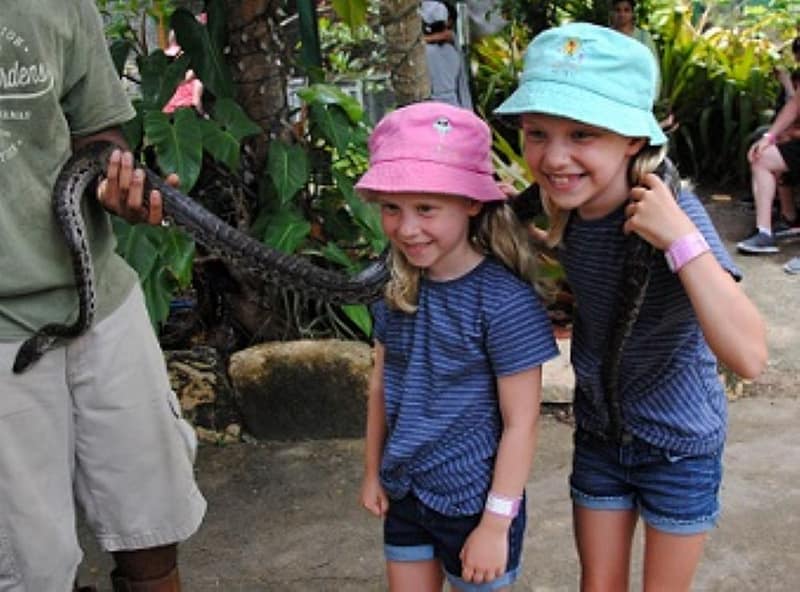
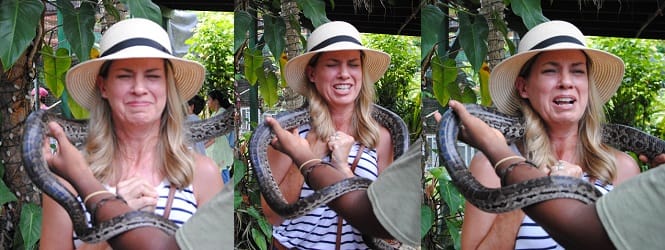
The best way to overcome a fear is by facing it head on, and I recently had an opportunity to do just that. While on vacation, our family visited the Ardastra Zoo in the Bahamas. It was a great place to get close to a lot of different animals, and while waiting for our turn to feed the lorikeets, a zookeeper approached with a snake and asked if we would like to hold it. Our girls were a bit apprehensive, but I encouraged them to take advantage of the opportunity and quickly volunteered to be the one taking pictures (a shameless ploy to get myself as far away from the reptile as possible). My tactic worked, and both girls got to not only pet but hold a boa constrictor. As soon as they were done, they started begging me to take a turn. It’s not a secret in our family that I’m afraid of snakes, so I did something they didn’t expect. On the spot I decided that today was the day to face my fear, so I turned my camera duties over to Joey. What followed was the longest 18 seconds of my life, in which the zookeeper attempted to drape my biggest fear around my shaking shoulders. I don’t recall the details of the experience beyond feeling my heart beat out of my chest, not being able to breathe, and hearing some sort of high-pitched squeak that involuntarily escaped my mouth. These embarrassing photos may give some insight into just how petrified I really was. It took half an hour just for my heart rate to return to normal. I’m not sure that I am going to volunteer for another hands-on snake encounter anytime soon, but I did face my fears head-on, and I think the girls were proud of me for trying (and probably a little entertained by my reaction).
Fears aside, snakes really are one of nature’s helpers, and they can be particularly useful in the garden. They eat rodents and even some insects (including pesky grasshoppers). They never chew or damage leaves. They don’t dig wide holes or leave behind obvious waste. All in all, they are pretty positive for the environment.
So the next time you come across a black racer in your garden, be grateful that he’s there helping you out. And I’ll be thankful that he’s in your garden and not mine. They say snakes are more afraid of me than I am of them . . . I say they’re wrong.