
Spring Vegetable Gardening
Fresh, Healthy, Homegrown . . .words restaurants use describing the best meals on their menus. You can have better tasting food without ever leaving home. All it takes is a backyard veggie garden. Below are our tips for garden success.
(Click to open a printable PDF version of the information below.)
Site Selection
- Choose a sunny spot with 6+ hours of sun per day.
- Make sure there is a water source nearby and that the garden is easy to get to.
Plan the Garden
- Pick veggies your family likes to eat.
- Make a simple garden design plan to organize your selections.
Prepare the Soil
- Rich soil is the start of every healthy veggie garden. Our favorite soils to use are Black Gold Garden Compost or Black Gold Flower & Vegetable Mix. Both are organic and allow veggie plants to thrive. Use Espoma’s Bio-tone organic starter plant food to get plants started off right.
- Peat, compost, and cow manure are also good options for creating a rich and healthy soil.
- Turn soil in the garden 2 to 3 weeks before planting, to allow everything to come together.
Plant Seeds or Vegetable Seedlings
- Starting from seeds is economical and lets you find great varieties.
- Use planting guides to determine when to plant.
- Stagger planting times to extend harvest season.
- Try companion planting.
Take Care of Your Veggies
- Water daily at first, and slowly reduce frequency.
- Fertilize weekly with Foxfarm’s Grow Big or monthly with Espoma’s Tomato-tone.
- Check garden regularly for insects and disease, and be prepared to spray if needed.
Pick when ripe and enjoy!
Warm-Season Vegetables: plant after last frost in Feb – Apr
- Tomatoes and Peppers
- Cucumbers and Eggplants
- Corn and Beans
- Cantaloupe and Watermelon
- Squash and Zucchini
- Okra
Cool-Season Vegetables: plant before it gets too hot in Feb – Mar
- Collards and Cabbage
- Lettuce and Spinach
- Broccoli and Cauliflower
- Radishes and Carrots
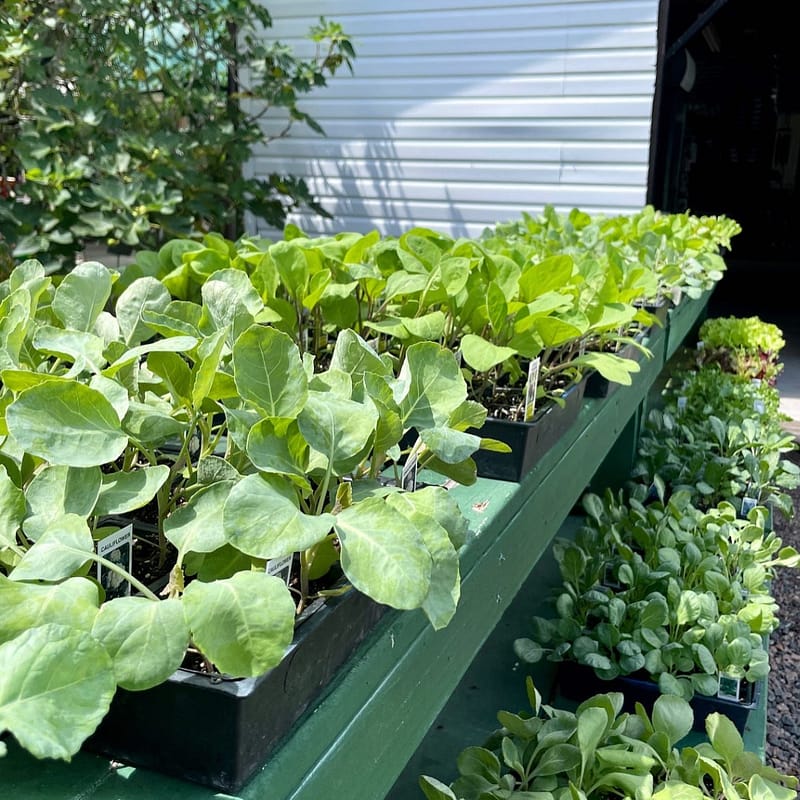
Anybody can sell you plants, we make sure you succeed.